.svg)

.svg)


.svg)

.svg)


.svg)


%201.svg)
.svg)


%201.svg)
%20(1)%201.svg)
.svg)


.svg)
%201.svg)
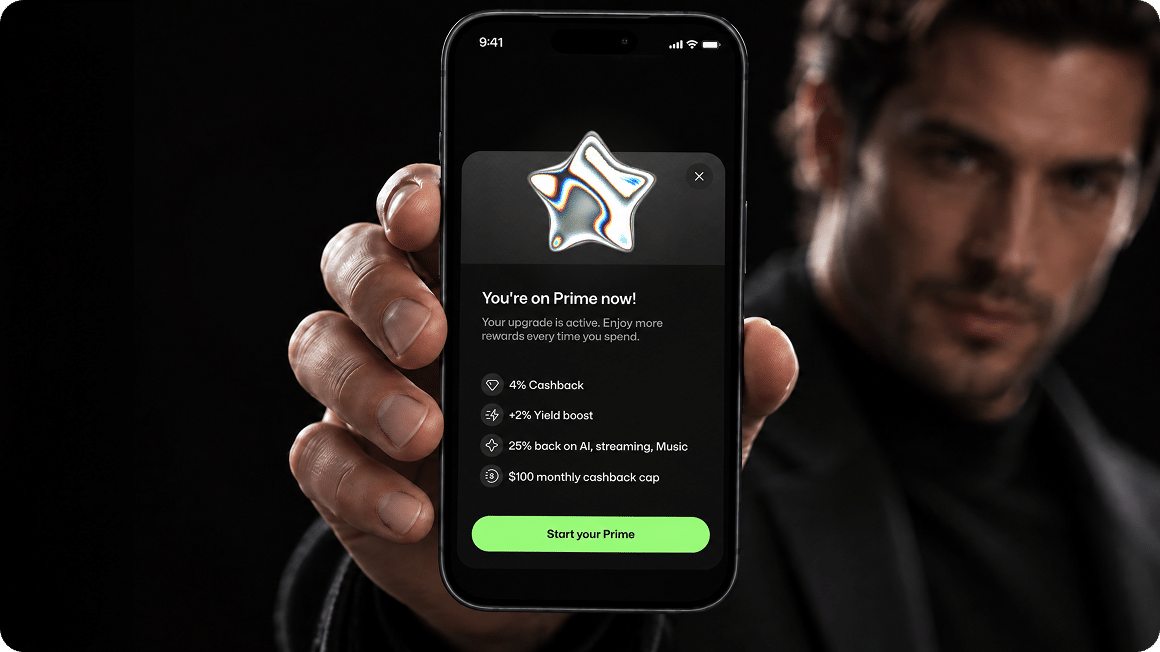
Two routes into a Solid tier: an annual subscription, or FUSE locked for 12 months. What that means for the network, and why the demand behind it is groceries, not trading.
Solid’s new tier system is live. There are now two routes into Prime: a $250 annual subscription, which is new, or 50,000 FUSE locked for 12 months. Ultra is 400,000 FUSE locked for 12 months, with no cash option at all.
Every upgrade is FUSE out of circulation for a year, sitting on the user’s own address, still earning yield, still earning points. It follows a week where soFUSE TVL grew 38% to $133K on the announcement alone, referral rewards started paying out in soFUSE, and Solid card spend hit a weekly record.
The subscription is the headline for users: a tier without buying a token first. The lock is the headline for the network. Here is why that matters.
1. What Solid announced
Solid, the non-custodial neobank built on Fuse, has reworked its membership tiers. Until now, users reached Prime or Ultra through points, or by parking FUSE in a liquid vault. The FUSE route is now a 12-month lock at the same amounts as before: 50,000 FUSE for Prime, 400,000 for Ultra. Ultra stays FUSE only, and a $250 annual subscription becomes the alternative route into Prime.
Locked FUSE sits in a vault on the user’s own address, visible in the app with a fixed unlock date. It keeps earning the FUSE vault yield (up to 14% APY today) and keeps earning Solid points for the whole 12 months. Users are not spending FUSE to get a tier. They are committing it, and it works for them the entire time.
Existing Prime and Ultra members keep their tier as long as they keep their FUSE in savings.
2. What the tiers are worth
The reason people will lock is that the tiers pay. Prime lifts card cashback from 3% to 4% and returns 25% on AI, streaming and software subscriptions. Ultra takes cashback to 5% and subscriptions to 50%. Both cut fees on deposits, swaps and FX.
On $1,000 of monthly card spend and $60 of subscriptions, Prime returns roughly $300 a year and Ultra roughly $600, on top of the yield the locked FUSE itself earns. At these amounts, Ultra remains the most accessible top tier among crypto cards and the only one whose cashback cap is reachable, at around $48,000 of annual spend.
3. Why it matters for FUSE
Three mechanics, none of them speculative.
FUSE leaves circulation for 12 months with every upgrade. An Ultra member is 400,000 FUSE that cannot move until autumn 2027. The more Solid grows, the more of the supply sits behind lock dates.
Every reward paid in Solid now lands in FUSE. Referral rewards ($25 to each side) are paid as soFUSE since mid-September, so the reward keeps earning and counts toward the next tier rather than sitting idle as stablecoin.
Demand is tied to card spend, not to trading. Solid’s weekly card volume just set a new record, active spenders are up roughly eightfold since July, and deposits are outpacing spend for the first time. Those are people buying groceries and paying subscriptions, and each of them now has a reason to hold more FUSE.
4. What comnes next
Solid announced the change on 23 September, a week before switching. Over that week, soFUSE TVL rose 38% to $133,000, before the new system went live.
Solid’s next two releases are lending (spend against your savings without selling them) and tokenized stocks on the Earn page. Both run on Fuse, both settle in the same smart account that now holds the locked FUSE.